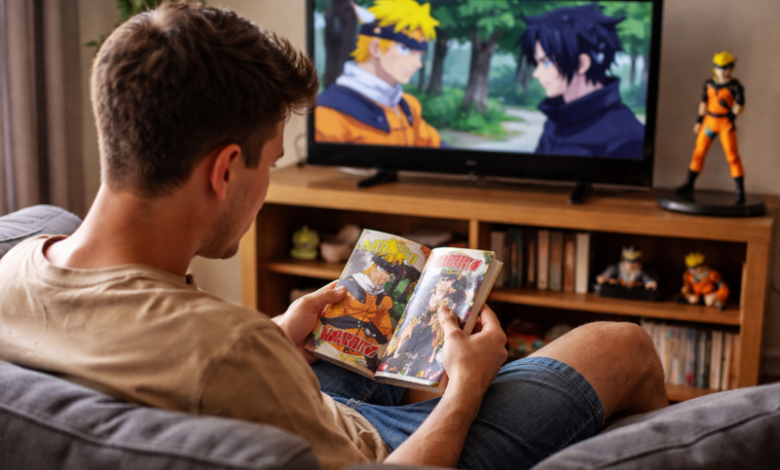
Understanding Naruto can sometimes feel like trying to piece together a giant puzzle thrown into the wind. Between childhood trauma, village politics, epic ninja battles and complex friendships, the plot spreads across hundreds of episodes and chapters. If you’ve ever asked yourself, “What is Naruto even about?” you’re not alone. This article breaks down the story of Naruto in a way that makes it easy to follow, even if you’ve never read the manga or watched the anime. You’ll get a step-by-step look at Naruto’s journey, the meaning behind major arcs, and key characters that shaped the world. And for those who want more than just reading, Australia’s leading anime store can deepen your experience with real collectibles. Whether you’re a beginner or someone who got lost halfway through, here’s a clear path through the ninja world of Konoha.
Naruto Uzumaki: From outcast to hero
The story of Naruto begins in the Hidden Leaf Village (Konoha), where a young orphan named Naruto Uzumaki lives a lonely and difficult life. He is shunned by villagers who fear him not for what he’s done, but for what’s inside him. At birth, Naruto became the host of the Nine-Tails Fox (Kurama), a powerful demon that once attacked the village and was sealed in him by the Fourth Hokage, his own father although Naruto doesn’t know this at first.
Naruto’s dream is to become the Hokage, the strongest ninja and leader of the village, so that people will finally acknowledge his existence. His story starts at the Ninja Academy, where he struggles with basic skills and respect, but quickly begins to change his destiny through sheer determination.
He joins Team 7 alongside Sakura Haruno and Sasuke Uchiha, under the guidance of the skilled and mysterious Kakashi Hatake. Together, they face early missions and challenges, revealing Naruto’s untapped potential and his growing bond with Sasuke a bond that soon becomes as sharp and fragile as a blade. The Naruto figures available at Naruto figures offer a tangible way to connect with these early arcs, capturing Naruto’s fierce ambition and Sasuke’s cold resolve. The beauty of Naruto’s arc is that it mirrors a slow-burning sunrise: at first faint and overlooked, but gradually impossible to ignore.
Key arcs that shape the Naruto universe
Naruto’s story unfolds across several major arcs. These arcs build the world, test characters, and shift the tone from light-hearted training to world-changing conflict.
The Chunin Exams
One of the first major turning points in the manga, the Chunin Exams bring together young ninjas from various villages. This arc introduces important characters like Gaara and Rock Lee and showcases intense battles that reveal Naruto’s unique fighting style: reckless yet deeply emotional. This is also where Orochimaru a rogue ninja obsessed with immortality emerges as a main antagonist. His presence foreshadows darker chapters ahead.
The Search for Tsunade
Following the attack on the village, a new Hokage is needed. Naruto sets out to find Tsunade, a legendary ninja healer with a gambling problem and deep personal trauma. This arc adds emotional weight and helps Naruto develop more than just physical strength he learns empathy and maturity.
Sasuke’s defection
As the rivalry with Naruto grows, Sasuke chooses a darker path, abandoning the village to seek power from Orochimaru. His departure marks a devastating moment for Team 7. Naruto promises to bring him back, setting up one of the manga’s most central emotional threads.
See also: How Life Transitions Impact Women’s Mental Health
The Shippuden shift: War, prophecy and legacy
After a time skip, the story continues in Naruto Shippuden. Characters are older, stronger, and face new threats that endanger the entire ninja world. Naruto is no longer the goofy underdog he’s now a key player in a prophecy predicting the world’s fate. He trains with Jiraiya, learns to control the Nine-Tails’ power, and slowly earns the respect of his village and former enemies. New villains like Pain leader of the Akatsuki bring god-like danger. Pain’s attack on Konoha and his ideology of pain-driven peace forces Naruto to mature. In one of the most powerful scenes, Naruto spares Pain and uses dialogue over violence a rare choice in shonen manga. The story’s later arcs dive into ancient ninja history, the origins of chakra, and cosmic forces manipulating events for centuries. While more complex, they tie into Naruto’s growth and the generational legacy he now represents.
Naruto and Sasuke: The final clash and reconciliation
The final battle between Naruto and Sasuke isn’t just about fists it’s about ideology. Naruto believes in bonds and forgiveness, while Sasuke believes sacrifice and solitude are the key to real peace. Their fight at the Valley of the End is both brutal and symbolic. They lose arms. They lose blood. But they gain understanding. Naruto’s victory is not physical it’s emotional. He convinces Sasuke that hatred isn’t the only path, that pain can birth unity, not division. Their reconciliation marks the end of the main storyline. Naruto eventually achieves his dream of becoming Hokage, proving that even the most misunderstood child can change the world.
Final thoughts and deeper connections
Naruto’s story is more than a tale of ninjas it’s a metaphor for growth, rejection, perseverance and the power of connection. Each arc, each battle, and each tear shed pushes readers to think about how they deal with failure, loneliness and ambition. For anyone who’s ever felt unseen, Naruto is a reminder that your voice matters. That’s why its legacy continues to thrive across generations, not just in books or screens, but in every person it touches. So, whether you’re just starting out or looking to revisit this masterpiece with fresh eyes, let Naruto’s journey remind you: no matter how dark your past, you can still choose who you become.