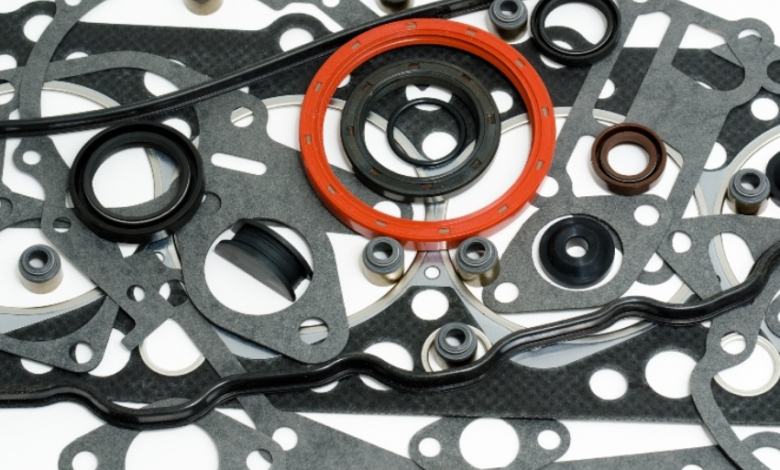
Gaskets are one of the most critical, yet often overlooked, components in modern engineering. These seemingly simple seals play a vital role in countless applications, preventing leaks and ensuring the safe, efficient operation of everything from car engines to sophisticated medical devices. Without effective sealing, many of the technologies we rely on daily would fail.
The Science of Gasket Materials
The effectiveness of a gasket depends entirely on the material it’s made from. Selecting the right material is a precise science, balancing factors like temperature resistance, chemical compatibility, pressure tolerance, and cost. Each application has unique demands, requiring a tailored approach to material choice.
Elastomers (Rubber)
Elastomers are a popular choice due to their flexibility and resilience. They can be compressed to form a tight seal and then return to their original shape. Common elastomers include:
- Nitrile (Buna-N): Known for its excellent resistance to oils, fuels, and petroleum-based hydraulic fluids, making it a staple in the automotive industry.
- Silicone: Valued for its wide temperature range, from as low as -60°C to over 200°C. It’s also resistant to UV radiation and ozone, and its non-toxic properties make it suitable for food and medical applications.
- Viton® (FKM): A high-performance fluoroelastomer that offers exceptional resistance to chemicals, high temperatures, and harsh environments. It is frequently used in aerospace and chemical processing where other materials would degrade.
- EPDM: Offers great resistance to weathering, ozone, and steam, making it ideal for outdoor applications and sealing systems in the automotive and construction sectors.
See also: Transform Your Home with Bespoke Custom Rooflights
Plastics and Polymers
Plastics offer a different set of properties, often providing rigidity and superior chemical resistance.
- PTFE (Teflon®): Famous for its non-stick surface and incredible chemical inertness. It can withstand a wide range of chemicals and temperatures, making it a go-to material in the chemical processing and food industries.
- PEEK: A high-performance thermoplastic known for its mechanical strength, temperature stability, and resistance to harsh chemicals. Its durability makes it suitable for demanding applications in aerospace and medical implants.
Metals
For high-pressure and high-temperature environments, metal gaskets are often the only viable option. Materials like stainless steel, Inconel®, and copper can withstand conditions that would cause elastomers or plastics to fail. They are commonly used in engines, exhaust systems, and high-pressure pipelines.
Applications in the Automotive Industry
The automotive industry is one of the largest consumers of engineered gaskets. Every vehicle contains hundreds of seals that are critical for performance, safety, and emissions control.
- Engine Sealing: Head gaskets, which seal the combustion chamber between the cylinder head and engine block, are perhaps the most well-known. They must withstand extreme temperatures, high pressures, and exposure to coolant and oil. Multi-layer steel (MLS) gaskets are now the standard for modern engines.
- Fluid Management: Gaskets are used throughout the powertrain to seal transmission fluid, engine oil, and coolant. Nitrile and silicone gaskets are common in these systems, preventing leaks that could lead to catastrophic engine failure.
- Exhaust Systems: Exhaust manifold gaskets must endure extremely high temperatures and corrosive gases. Metal or composite gaskets are used here to ensure a tight seal, which is essential for managing emissions and engine performance.
Applications in the Aerospace Industry
The aerospace sector demands the highest levels of performance and reliability. Gaskets used in aircraft and spacecraft must function flawlessly under extreme conditions, including vast temperature fluctuations, high altitudes, and intense vibrations.
- Fuel Systems: Sealing jet fuel is a critical safety function. Gaskets made from materials are used because of their superior resistance to aggressive aviation fuels and hydraulic fluids.
- Hydraulic Systems: Aircraft rely on hydraulic systems for flight controls, landing gear, and brakes. These systems operate under immense pressure, and any leak could be disastrous. High-performance elastomer and metal gaskets ensure the integrity of these vital systems.
- Environmental Control: In the vacuum of space or at high altitudes, maintaining a pressurized cabin is a matter of life and death. Silicone gaskets are often used for sealing windows, doors, and hatches because they remain flexible and effective across a wide temperature spectrum. Specialized flash cut gaskets can be produced quickly for custom aerospace prototypes and repairs.
Applications in the Electronics Industry
As electronic devices become smaller, more powerful, and more integrated into our lives, the need for effective sealing has grown. Gaskets in electronics protect sensitive components from environmental hazards.
- EMI/RFI Shielding: Electromagnetic interference (EMI) and radio frequency interference (RFI) can disrupt the performance of electronic devices. Conductive gaskets, often made from silicone filled with metal particles, are used to shield components and prevent interference.
- Environmental Sealing: Many consumer electronics, from smartphones to smartwatches, are now designed to be water-resistant. Tiny, precisely engineered gaskets made from silicone or other elastomers seal casings, buttons, and ports, protecting the internal circuitry from dust and moisture.
- Thermal Management: High-performance electronics generate significant heat. Thermal interface materials, which can be in gasket form, help dissipate this heat by creating a conductive path between a heat-generating component and a heat sink.
Applications in Medical Devices
In the medical field, biocompatibility and sterilization are paramount. Gaskets used in medical devices must be non-toxic and able to withstand rigorous cleaning and sterilization processes.
- Surgical Instruments: Many surgical tools and diagnostic devices require seals that can endure repeated autoclaving (steam sterilization). Silicone and PEEK are common choices due to their ability to handle high temperatures and steam without degrading.
- Fluid and Drug Delivery: Gaskets are essential in IV systems, pumps, and other fluid-handling devices to prevent leaks and contamination. The material must be compatible with the specific drugs or fluids being delivered.
- Medical Implants: For implantable devices like pacemakers, the seals must be completely biocompatible and provide a long-term hermetic seal to protect the internal electronics from bodily fluids. Specialized polymers and metals are often used for these critical applications.
Conclusion
The engineered gasket industry is evolving with advancements in material science, introducing high-performance polymers and composites, and improvements in manufacturing techniques like 3D printing and advanced injection molding. These innovations meet growing demands for complex geometries and integrated functionalities in advanced sealing solutions.