In the global electronics landscape, certain geographical names become synonymous with excellence in specific sectors: Silicon Valley for software, Switzerland for horology, and Shenzhen for optoelectronics. For the professional lighting industry, the question is no longer where the majority of the world’s lighting is produced, but why the most innovative LED strip light manufacturers continue to center their operations in this South China tech hub.
As we navigate 2025 and 2026, the global supply chain is evolving. Themes of “near-shoring” and “de-risking” are frequent topics in boardroom discussions. However, when it comes to the highly specialized, rapidly iterating world of LED strip technology, the Shenzhen ecosystem remains unparalleled. In this concluding analysis, we examine the structural advantages, technological leaps, and strategic logic that keep the Pearl River Delta at the forefront of the lighting revolution.
The Power of the “Vertical Integration” Cluster
The primary advantage of sourcing from top-tier Chinese manufacturers isn’t just labor cost—it is the Industrial Cluster Effect. Within a 50-kilometer radius of Shenzhen, a manufacturer has access to every single component in the LED strip bill of materials (BOM).
The 24-Hour Supply Cycle
In most parts of the world, sourcing a custom-designed PCB or a specific silicone formula might take weeks. In Shenzhen, it takes hours.
- Component Proximity: The proximity to world-class LED chip binders, copper foil suppliers, and high-precision resistor factories allows manufacturers to move from a design concept to a physical prototype in a fraction of the time required in Europe or North America.
- Speed to Market: This agility is critical when architectural trends shift. When “COB technology” emerged as a dominant trend, Shenzhen-based LED strip light manufacturers were able to retool their SMT lines and source the necessary phosphor-doped silicone within months, effectively setting the global pace for the “dot-free” revolution.
From “Made in China” to “Engineered in China”
The most significant shift in the last decade has been the transition from simple assembly to deep-tech R&D. The narrative that China only provides low-cost clones is decades out of date.
Leading in Material Science
Modern high-performance strips require advanced chemistry. Chinese researchers are currently leading the way in:
- Thermal Interface Materials (TIM): Developing new adhesives that facilitate faster heat transfer from the LED to the aluminum profile.
- High-Index Silicones: Engineering encapsulation materials that offer higher light extraction efficiency, allowing for 160lm/W+ ratings that meet the latest EU energy standards.
Patent Density and Innovation
Top manufacturers are no longer just following international standards; they are helping write them. By investing heavily in automated optical inspection (AOI) and proprietary circuit designs (such as integrated Constant Current ICs), companies like SignliteLED are providing solutions that Western engineering firms frequently specify for their most prestigious global projects.
See also: Why Your Home Internet Plan Matters More Than Ever
The Resilience of the Flexible Supply Chain
Global disruptions—from pandemics to trade tensions—have tested the resilience of the lighting supply chain. Shenzhen’s manufacturers have proven uniquely capable of adapting through “Flexible Manufacturing.”
- Micro-Customization (ODM): Unlike massive automated factories in other sectors that require “one million units” to change a spec, the premium LED strip sector in China is built for customization. Whether a designer needs a specific 2450K color temperature or a non-standard 6mm PCB width for a museum display, the local supply chain can accommodate “small-batch, high-complexity” orders that are economically unfeasible elsewhere.
- Redundancy and Reliability: The sheer density of suppliers means that if one provider faces a shortage, there are ten others within driving distance, ensuring that large-scale architectural projects are not delayed by single-point failures.
Quality Control in the Era of “Industry 4.0”
Quality in 2025 is no longer checked by a human with a magnifying glass; it is managed by data.
Automated Optical Inspection (AOI)
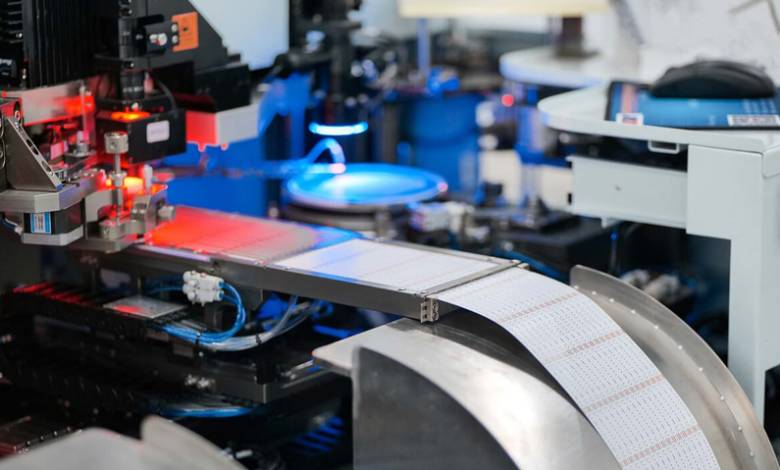
Professional-grade LED strip light manufacturers utilize AI-driven AOI systems at multiple stages of the SMT line. These cameras detect solder bridge defects, missing components, or chip misalignment that the human eye would miss.
Spectral Consistency Management
As we have discussed throughout this series, color consistency (binning) is the hallmark of quality. Leading factories now utilize cloud-based spectral tracking, ensuring that the “Warm White” produced in January is a 100% spectral match to the batch produced in June. This level of data-driven manufacturing is what allows for the 5-year and 10-year warranties now standard in the high-end market.
Navigating Global Compliance and Green Directives
As international regulations like the EU’s ErP (Energy-related Products) and North America’s Title 24 become more stringent, the burden of compliance falls on the manufacturer.
- The Certification Investment: Maintaining UL, ETL, CE, RoHS, and CB certifications is an expensive and rigorous process. The leading Chinese manufacturers treat these not as “boxes to tick,” but as fundamental components of their brand equity.
- ESG and Sustainability: We are seeing a massive push toward “Green Manufacturing” in Shenzhen. This includes the implementation of lead-free soldering, water-recycling systems in PCB etching, and the transition to plastic-free, recyclable packaging for global shipping.
Case Study: Lighting the Global Skyline
Consider the iconic skyscrapers of Dubai, the luxury retail strips of Paris, and the corporate campuses of Silicon Valley. A significant majority of the linear lighting in these landmarks originates from high-end Shenzhen-based factories.
- The Strategic Reason: These projects require a “Triple Threat” of capabilities: massive scale, extreme technical precision, and rapid delivery.
- The Partnership: In these scenarios, the procurement team works directly with LED strip light manufacturers to co-engineer the lighting solution, ensuring that the voltage drop is calculated for the specific building height and that the IP rating is tested against local environmental stressors.
The Future: AI and the Next Generation of Light
What does the future hold for the Shenzhen lighting cluster? We are already seeing the first wave of:
- Mini-LED and Micro-LED Strips: Pushing the density of light to levels that mimic a solid neon gas tube without the fragility.
- AI-Integrated Drivers: Systems that can “self-heal” by adjusting current to compensate for individual diode degradation.
- Human-Centric Spectral Tuning: Strips that don’t just change color but change their full spectral power distribution (SPD) to promote better sleep and productivity.
Why Choosing the Right Partner is More Critical Than Ever
As the market continues to bifurcate between “commodity” and “professional” lighting, the buyer’s greatest asset is their choice of partner. A manufacturer that owns its production line, invests in its own R&D, and provides transparent data is worth more than a dozen brokers.
Conclusion: The Luminous Road Ahead
The story of the LED strip light is a story of convergence—where electronics, material science, and architectural design meet. While the world’s supply chains are diversifying, the core of innovation remains firmly rooted in the specialized ecosystems that have spent decades perfecting this technology.
Choosing to work with an elite manufacturer in this region is not just a procurement decision; it is a strategic move to ensure your projects are built on a foundation of engineering excellence. For those seeking to bridge the gap between visionary design and industrial reality, SignliteLED represents the best of this global hub—combining the speed and flexibility of the Shenzhen supply chain with a world-class commitment to quality and innovation.