Humidity control is a critical requirement in many industrial and commercial environments. Excess moisture can damage equipment, compromise product quality, and create uncomfortable or unsafe indoor conditions. Traditional cooling based dehumidification systems often struggle to maintain precise humidity levels, especially in high humidity or low temperature applications.
Desiccant dehumidification systems provide a reliable solution for controlling moisture independently of temperature. These systems are designed to remove water vapor directly from the air, making them highly effective in environments where strict humidity control is essential.
What Is a Desiccant Dehumidification System?
A desiccant dehumidification system is a humidity control solution that uses moisture absorbing materials known as desiccants to remove water vapor from the air. Unlike refrigeration based systems, desiccant systems do not rely on cooling air below its dew point. Instead, they capture moisture through adsorption.
This approach allows precise humidity control even at low temperatures or very low dew point requirements. As a result, desiccant dehumidification systems are widely used in industrial and commercial applications where conventional systems are ineffective or inefficient.
How Desiccant Dehumidification Systems Work?
Moisture Adsorption Process
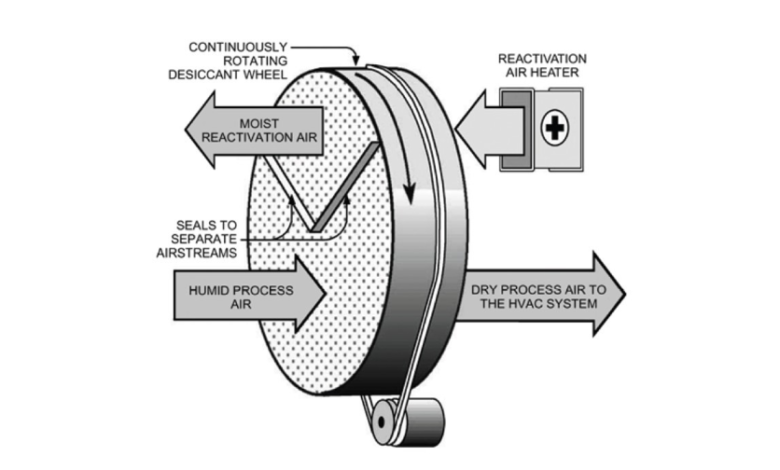
The core function of a desiccant dehumidification system is moisture adsorption. Moist air passes through a desiccant material that attracts and holds water vapor from the air stream. This process reduces humidity without significantly changing air temperature.
The adsorption process includes:
- Moist air entering the system
- Contact with desiccant media
- Moisture being captured at a molecular level
- Dry air exiting the process section
- Continuous airflow for consistent humidity control
This method ensures stable and predictable moisture removal.
Regeneration Process
Once the desiccant becomes saturated, it must be regenerated to restore its moisture absorbing capacity. Regeneration is achieved by applying heat to release the absorbed moisture.
The regeneration process involves:
- Heated air passing through the desiccant
- Moisture being driven out of the material
- Exhaust of humid regeneration air
- Continuous rotation or cycling of desiccant media
This allows uninterrupted operation and long term reliability.
Types of Desiccant Dehumidification Systems
Different desiccant dehumidification systems are available based on application needs and performance requirements. Each type offers specific advantages.
Common system types include:
- Solid desiccant rotor systems
- Liquid desiccant dehumidification systems
- Passive desiccant units
- Active desiccant systems with external regeneration
The choice depends on humidity levels, airflow, and operational conditions.
Key Components of a Desiccant Dehumidification System
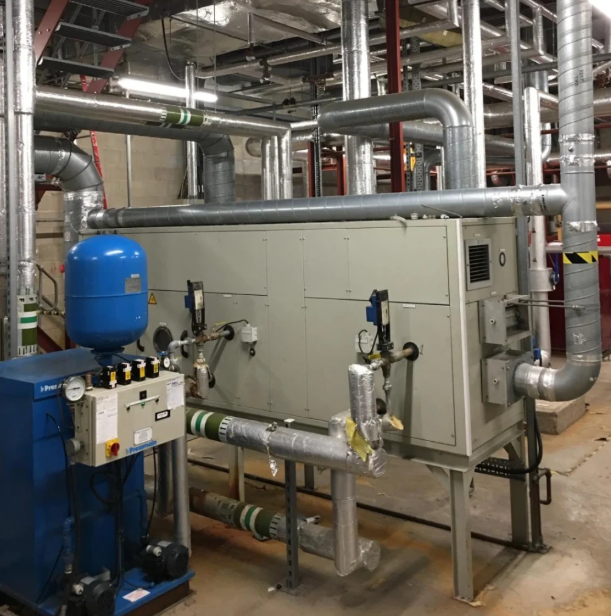
A desiccant dehumidification system consists of carefully engineered components designed for efficient moisture removal and durability. Each component plays a vital role in system performance.
Key components include:
- Desiccant rotor or adsorption media
- Process air section
- Regeneration air section
- Heating source for regeneration
- Filtration system
- Control and monitoring systems
Together, these components ensure consistent humidity control and system stability.
See also: When Your Smart Wallet Keeps You Safe: Using Tech to Set Gambling Limits and Stay in Control
Benefits of Desiccant Dehumidification Systems
Desiccant dehumidification systems offer several advantages over conventional dehumidification methods. These benefits directly impact operational efficiency and product protection.
Key benefits include:
- Precise and stable humidity control
- Effective performance at low dew points
- Improved indoor air quality
- Reduced risk of condensation and corrosion
- Protection of sensitive materials and equipment
These benefits make desiccant systems ideal for demanding environments.
Industrial Applications of Desiccant Dehumidification Systems
Many industrial processes require strict humidity control to ensure product quality and operational reliability. Desiccant dehumidification systems are widely used in humidity sensitive industries.
Industrial applications include:
- Pharmaceutical manufacturing
- Food processing and cold storage
- Electronics and battery production
- Chemical processing plants
- Specialty manufacturing environments
In these industries, humidity control supports compliance and product integrity.
Commercial Applications of Desiccant Dehumidification Systems
Commercial facilities also benefit from advanced humidity control, particularly in environments with high occupancy or sensitive contents. Desiccant systems provide consistent performance across varying conditions.
Commercial applications include:
- Hospitals and healthcare facilities
- Museums and archival storage
- Shopping malls and commercial complexes
- Hotels and hospitality buildings
- Laboratories and research centers
These spaces require reliable humidity management for comfort and preservation.
Desiccant Dehumidification vs Conventional Dehumidification
Compared to conventional refrigeration based dehumidification, desiccant systems offer superior performance in challenging conditions. Traditional systems struggle in low temperature or low humidity environments.
Desiccant dehumidification systems provide:
- Better control in high humidity conditions
- Consistent performance at low dew points
- Reduced dependence on cooling systems
- Improved reliability in industrial applications
This makes them the preferred choice for precise humidity control.
Role of Desiccant Dehumidification in Energy Efficient HVAC Design
Desiccant dehumidification systems play an important role in energy efficient HVAC design. By separating humidity control from temperature control, they reduce the overall load on cooling equipment.
These systems can be integrated with energy recovery solutions to further improve efficiency. This approach supports sustainable building design and lowers operational energy consumption.
Factors to Consider When Selecting a Desiccant Dehumidification System
Selecting the right desiccant dehumidification system requires careful evaluation of operational needs. Proper selection ensures optimal performance and cost efficiency.
Important factors include:
- Required humidity and dew point levels
- Airflow capacity and process conditions
- Regeneration heat source availability
- Space and installation constraints
- Maintenance and lifecycle costs
Considering these factors ensures long term reliability.
Maintenance and Operational Best Practices
Routine maintenance is essential for maintaining system performance and efficiency. Regular inspections help identify wear or contamination before it impacts operation.
Best practices include cleaning filters, monitoring regeneration performance, and inspecting desiccant media. Proper maintenance extends system life and ensures consistent humidity control.
Future Trends in Desiccant Dehumidification Technology
Advancements in desiccant materials and system design are improving efficiency and performance. Hybrid systems that combine desiccant dehumidification with energy recovery are becoming more common.
As industries demand greater control and sustainability, desiccant dehumidification systems will continue to play a critical role in modern HVAC solutions.
Conclusion and Contact CTA
Desiccant dehumidification systems provide precise, reliable, and energy efficient humidity control for industrial and commercial environments. Their ability to perform under demanding conditions makes them essential for protecting products, equipment, and indoor air quality. By integrating desiccant technology into HVAC design, facilities can achieve long term performance and operational stability.
To learn more about advanced humidity control solutions, connect with Desiccant Rotors International and discover how their expertise can support your industrial and commercial dehumidification needs.