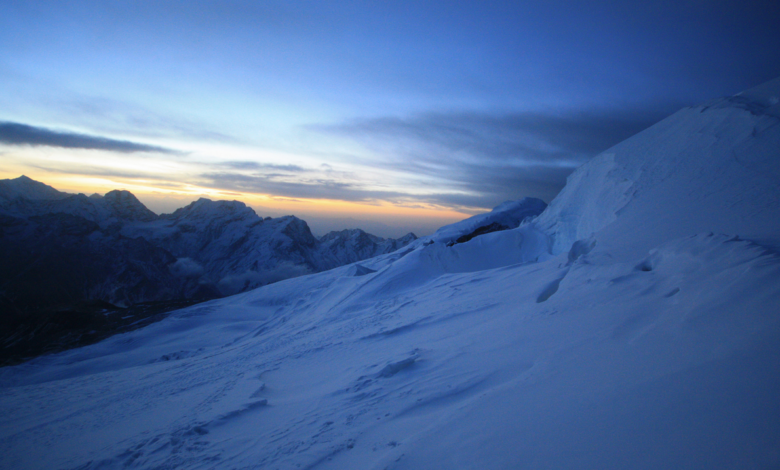
Peak climbing in the Himalayas is a combination of high altitude, technical grounds, and unpredictable weather. The climbers encounter thin air, ice-covered slopes, and unpredictable weather conditions that require preparation and respect for environment.
These mountainous conditions are highly dangerous, so safety is the greatest concern. Having the correct equipment not only keeps the climbers away from the extreme elements but also helps them to withstand physical strength and fluid motion. Proper gear minimizes the chances of frostbite, altitude sickness, and injury.
Morale and performance are directly related to comfort during the climb. Comfortable clothing, good boots, and good sleeping equipment help maintain body temperature and body energy. It is imperative to remain dry and warm in acclimatization for general well-being on the route.
The following gear checkout is specific to such popular trekking peaks as Mera Peak, Island Peak, Lobuche East, and Pisang Peak. Such ascents need technical gear and proper training that is befitting middle-grade mountaineers interested in safe and fun ascents.
Understanding the Himalayas’ Climbing Conditions
The altitude of climbing Himalayas is usually between 5,000-7,000 meters where the oxygen levels become very low. Daytime temperatures can be mild, but nights often drop well below freezing. fOxygen levels drop by roughly 50% at 5,500 m, which impacts stamina.
Climbers are exposed to a wide variety of terrain (glaciers, steep ice walls, rocky faces, mixed areas, etc.), and may need technical expertise. They both require certain gear such as crampons, ice axes and climbing harnesses to navigate the area safely and have sure footing.
The climate in the Himalayas is very unpredictable and it is capable of bringing storms, heavy winds, and sudden changes of temperature. High-quality equipment that withstands the weather conditions is essential to safeguard the mountaineers and ensure progress despite changing conditions.
Clothing Layers for High Altitude
It is extremely important to layer up clothes when climbing at high altitudes to control body heat and moisture. All the layers have a certain purpose, and the combination of them is to ensure that climbers are kept warm, dry, and comfortable during the climb.
The bottom is made up of moisture-wicking thermal apparel that draws sweat off the skin. This would avoid chilling that may cause hypothermia and help alleviate the pain when faced with a strenuous activity in cold conditions.
The mid layer is used to insulate with the help of fleece or down jackets. This layer captures body heat; it provides a warm layer without a lot of bulk. Adjusting this layer helps climbers adapt to temperature changes during rest or exertion.
The outer shell must be waterproof and windproof, which protects against rain, snow, wind, and hail, and the wind of the mountains. The layering system is supplemented by accessories, such as gloves, hats, balaclavas, and gaiters, to guard against frostbite of the extremities.
Read Also: Understanding tn lcd Technology
Climbing Equipment Checklist
Himalayan peak climbing requires double or triple-insulated mountaineering boots. Climbing boots should be insulated to provide warmth and support on the uneven, icy terrain. Having boots that are properly fitted minimizes the likelihood of frostbite and provides the climber with stability for long climbs.
Crampons or ice axes are very useful for climbing ice and snow slopes. Crampons attach to your boots and give you security while walking on steep snow and sloped ice; the ice axes provide balance as well as help with cutting steps and/or stopping your fall on the steep terrain by self-arresting.
A helmet helps protect the climber from falling rocks and ice, while a harness and carabiners are great for securing the climber while tied to the rope for safety. This safety equipment is also important while crossing over crevasses, while negotiating technical sections using fixed lines or belays.
Using ascenders and descenders provides climbers a way to go up ridges or rappel down while climbing steep ridges or rappelling over cliffs. The use of slings help with securing anchor points for gear placement or extending some gear to a better anchor point. Expedition ropes and anchors are typically provided by the outfitter.
Camping & Sleeping Essentials
Himalayan climbs require a four-season sleeping bag with a temperature range of -20 °C to -30°C. It keeps you warm on cold nights, preventing the possibility of hypothermia and giving time to sleep in the process of acclimatization and recovery at elevation.
An inflatable sleeping pad offers both protection against cold ground and cushions to help avoid pressure. The liner that has been added to the sleeping bag can help maintain hygiene and increase the life of the sleeping bag, besides adding warmth by obstructing the passage of cold air.
A lightweight, long-lasting tent is important to survive in the strong winds and snow. A reliable headlamp with extra batteries ensures visibility during night climbs and emergencies.
Personal and Trekking Accessories
The trekking poles ensure stability when walking in rough grounds and also alleviate pressure on the knee joints during the long up and downhill walks. A duffel bag is durable and contains heavy equipment, whereas a pack is tight to fit and carries everyday items, which is convenient and comfortable.
Sunglasses with UV protection are important at higher altitudes, as the sun can be extremely intense at high altitudes, especially when reflecting off the snow and ice, because it can lead to snow blindness very quickly. Quality sunglasses will protect your eyes from damaging rays and enhance visibility in an all-white world.
Refillable water bottles will easily ensure that water is consumed during the climb, and purification tablets will provide safe drinking water by killing harmful bacteria. It is important to remain hydrated and healthy to avoid altitude sickness and keep your energy levels up whenever you are on the trail.
A quick-dry towel and personal toiletries maintain hygiene in remote environments. A basic first-aid kit, with supplies for blister treatment, treats the frequent ailments and pain immediately, which is crucial to safety and comfort on long walks.
Technical & Safety Gear (for advanced climbs)
A GPS and altimeter watch are also necessary to be used during navigation and altitude tracking. They assist climbers to monitor their progress, not to lose their way, and make wise decisions to be safe on the difficult Himalayan routes.
Technical climbs require avalanche safety equipment. A snow shovel, transceiver, and avalanche probe can be used to locate and rescue easily in case one is trapped in a slide. Climbers should be properly trained to use avalanche gear effectively.
Helmet cameras/Go Pros are commonly used accessories to record climbs. They help to record stunning scenes and individual accomplishments, and the hands-free mode will help to help climbers concentrate on technical work and safety. Climbing harness lanyards and fixed-line ascenders are mandatory on steep snow and ice routes.
Packing Strategy
Managing the weight of the pack is important because there are limits to what a porter can carry. Pack only essential gear and ensure weight is evenly distributed, so that the load is balanced evenly to ensure comfort and efficiency throughout the trekking and climbing sections.
Dry bags are important to protect your gear from moisture, snow, and rain. Backpacks are covered by waterproof materials, which protect the equipment in case of unpredictable weather in the Himalayas, as well as keep the contents dry and operating. Pack summit gear separately for easy access during summit push.
Labeling and sorting equipment will eliminate confusion, particularly in base camp and summit pushes. Clearly defined bags enable easy access to an item, streamline packing, and ease stress during the critical and time-based climbing situations.
Conclusion
The proper gear is essential for safety, comfort, and success on high-altitude climbs in the Himalayas. Choosing proper equipment is also critical to weathering the extreme environmental conditions and supporting your body’s endurance on severe high-altitude climbs.
To avoid being underprepared, reconfirm the gear list provided by your expedition company before you leave. You want to double-check what they are supplying and what you need to pack before the trip, so you are not surprised at the last minute and are completely prepared for your expedition.
Please download the printable Himalayan Peak Climbing Gear Checklist for your convenience. It will help you stay organized, pack efficiently, and feel fully prepared for your Himalayan ascent.