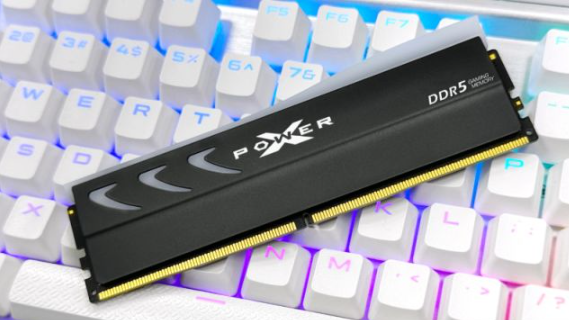
Modern computing demands speed, responsiveness, and the ability to handle multiple workloads at the same time. From professional content creation and software development to enterprise data processing and advanced gaming, multitasking has become a standard requirement rather than a luxury. This growing performance demand has pushed memory technology to evolve rapidly, leading to the rise of DDR5 Memory Modules as the new industry benchmark.
DDR5 is designed to deliver higher bandwidth, improved power efficiency, and greater capacity compared to previous generations. These improvements directly impact how smoothly systems manage multiple applications, background processes, and heavy data tasks simultaneously. As workloads continue to expand, DDR5 is proving to be a critical upgrade for achieving consistent multitasking performance and overall system efficiency.
Understanding the Shift from DDR4 to DDR5
Before exploring multitasking benefits, it is important to understand what makes DDR5 fundamentally different.
DDR4 served systems well for years, but modern workloads began exceeding its performance limits. DDR5 was developed to remove these bottlenecks by introducing architectural enhancements that improve speed, stability, and data handling.
Key generational improvements include:
- Higher base bandwidth
- Increased module capacity
- Improved power management
- Better data channel efficiency
Higher Bandwidth for Faster Multitasking
Bandwidth refers to how much data memory can transfer to the processor per second. DDR5 significantly increases this transfer rate, enabling faster communication between components.
With higher bandwidth, systems can:
- Run multiple heavy applications together
- Process large files quickly
- Handle real-time data streams
- Support complex simulations
For professionals working with editing software, 3D rendering tools, or analytics platforms, this bandwidth boost results in smoother workflows and reduced waiting time.
Increased Capacity for Heavy Workloads
One of the most impactful improvements in DDR5 is module density. DDR5 supports much higher per-module capacity than previous generations.
This expansion allows systems to handle memory-intensive operations such as:
- Virtual machines
- AI processing
- Big data analytics
- Enterprise databases
Higher capacity ensures each application receives sufficient memory allocation, preventing slowdowns caused by resource shortages. Organizations upgrading infrastructure through suppliers like Ram Exchange often prioritize high-capacity DDR5 configurations to support scaling workloads without performance compromise.
See also: Understanding tn lcd Technology
Improved Power Efficiency and Thermal Management
Performance upgrades often raise concerns about energy consumption and heat output. DDR5 addresses both through redesigned power architecture.
Unlike earlier generations, DDR5 shifts power management from the motherboard to the memory module itself. This results in:
- More precise voltage regulation
- Lower energy consumption
- Reduced heat generation
- Improved system stability
Energy eDual Channel Architecture for Better Data Flow
DDR5 introduces a dual independent channel design within each module. Instead of one 64-bit channel, DDR5 splits operations into two 32-bit channels.
This structural change improves:
- Data processing efficiency
- Task prioritization
- Memory access speed
- Multitasking responsiveness
By allowing simultaneous data transactions, systems experience less congestion when multiple applications demand memory resources at once.
On-Die ECC for Enhanced Reliability
Error correction has traditionally been limited to server-grade memory. DDR5 integrates on-die ECC (Error Correcting Code) directly into the module.
This feature helps detect and correct data errors before they impact system operations.
Benefits include:
- Greater data integrity
- Reduced crash risk
- Improved uptime
- More stable multitasking
For mission-critical environments such as financial systems or healthcare databases, this reliability enhancement is highly valuable.
Performance Gains in Professional Applications
DDR5’s architectural improvements translate directly into real-world productivity gains across industries.
Creative professionals benefit from faster rendering and editing timelines. Large media files load quicker, previews render smoothly, and multitool workflows remain responsive. Software developers experience faster compile times and smoother emulator performance. Running multiple development environments simultaneously becomes far more efficient.
Data analysts handling massive datasets see reduced processing lag, enabling quicker insights and reporting cycles. Businesses sourcing enterprise-grade DDR5 upgrades from Ram Exchange often deploy them in high-performance workstations to maximize employee productivity.
Gaming and Streaming Multitasking Advantages
Gaming systems are among the most demanding multitasking environments today. Modern games run physics engines, AI elements, high-resolution assets, and real-time networking simultaneously.
DDR5 enhances gaming performance by:
- Increasing frame stability
- Reducing load times
- Preventing background lag
- Supporting live streaming tools
Gamers who stream gameplay while running voice chat, overlays, and recording software benefit significantly from DDR5’s expanded bandwidth and capacity.
DDR5 in Virtualization and Cloud Computing
Virtual environments rely heavily on memory distribution. Each virtual machine requires dedicated allocation to function smoothly.
DDR5 supports virtualization by enabling:
- Higher VM density per server
- Faster cloud application delivery
- Better remote desktop performance
- Efficient container deployment
Future-Ready Infrastructure Investment
Technology adoption continues accelerating across AI, machine learning, and real-time analytics. These workloads demand rapid data processing and constant multitasking.
DDR5 prepares systems for future innovation by offering:
- Scalable capacity growth
- Support for next-gen processors
- Higher throughput ceilings
- Long-term compatibility
Infrastructure built on DDR5 remains performance-ready for years, reducing the need for frequent upgrades. Enterprises planning long-term hardware strategies often partner with suppliers like Ram Exchange to secure scalable, cost-effective DDR5 deployments.
Signs It Is Time to Upgrade to DDR5
Many users operate systems that struggle with modern multitasking demands. Identifying upgrade signals early prevents productivity loss.
Common indicators include:
- Frequent lag during multitasking
- System freezing under load
- Slow rendering or compile times
- Limited virtual machine capacity
- Performance drops during streaming or gaming
Choosing the Right DDR5 Configuration
Selecting the right DDR5 setup requires balancing performance needs and system compatibility.
Key considerations include:
- Motherboard DDR5 support
- Processor compatibility
- Required capacity
- Speed ratings
- Workload type
Conclusion
Multitasking performance defines modern computing efficiency, and memory technology plays a central role in achieving it. DDR5 represents a major leap forward, delivering higher bandwidth, expanded capacity, improved reliability, and better power efficiency than previous generations.
From enterprise infrastructure and virtualization to creative production and gaming, DDR5 enables systems to manage complex workloads simultaneously without compromise. It is not just an upgrade. It is a long-term performance investment. If you are ready to enhance system speed, scalability, and multitasking power, now is the time to act. Contact us today to explore high-performance DDR5 upgrades and expert support tailored to your infrastructure needs.