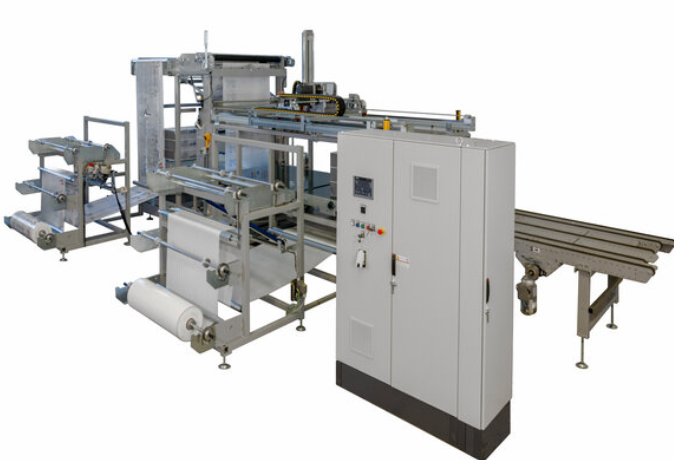
Modern businesses need packaging solutions that protect products, maintain presentation quality, and support efficient production. An automatic plastic wrapping machine helps manufacturers automate essential packaging tasks, including wrapping and sealing products with plastic film. These machines are useful across industries such as food and beverages, pharmaceuticals, cosmetics, electronics, and consumer goods, where consistent packaging can improve productivity and prepare products for storage, distribution, and retail.
What Is an Automatic Plastic Wrapping Machine?
An automatic plastic wrapping machine uses mechanical systems to wrap products with suitable packaging film. Depending on the machine design, it may perform several operations automatically, such as product feeding, film application, sealing, cutting, and wrapping.
Automation reduces the need for repetitive manual handling and helps businesses maintain a more consistent packaging process. Different machines are designed for different products, packaging materials, and production requirements. Selecting the right model depends on the product’s dimensions, desired appearance, required output, and type of protective packaging.
Types of Automatic Plastic Wrapping Machines
Several types of wrapping machines are available to accommodate different packaging needs.
Shrink wrapping machines: These machines cover products with shrink film and use controlled heat to create a close-fitting package. They are commonly used for bottles, cartons, multipacks, and consumer products.
Flow wrapping machines: These systems wrap individual products in flexible film and seal the package along designated edges. They are suitable for many food products, household items, and manufactured goods.
Overwrapping machines: These machines fold film around products or bundles to create neat packaging, often for boxes and retail products.
Pouch packing machines: These systems form or fill pouches and seal them according to the product and packaging format.
Each machine type offers different capabilities, so businesses should match the equipment to their packaging specifications before making a purchase.
Key Benefits of Automated Wrapping Equipment
Investing in automated packaging equipment can provide several operational advantages.
- Improved productivity: Automated processes help businesses package products more efficiently than repetitive manual wrapping.
- Consistent presentation: Controlled wrapping and sealing can create uniform packages suitable for retail shelves and distribution.
- Product protection: Appropriate packaging film helps protect products from dust, dirt, and certain environmental exposures.
- Reduced manual workload: Automation can limit repetitive tasks and allow employees to focus on other production activities.
- Better process control: Adjustable settings can help operators adapt the packaging process to different products and film requirements.
Actual performance depends on the machine model, product characteristics, packaging material, and production-line configuration.
Applications Across Different Industries
Automatic plastic wrapping machines support a wide variety of commercial applications.
In the food and beverage industry, wrapping equipment can package cartons, bottles, trays, and selected food products. The appropriate packaging method depends on hygiene requirements and the product’s storage conditions.
In the pharmaceutical and healthcare sectors, suitable wrapping systems can help package cartons, medical supplies, and personal care products. Equipment and packaging materials must meet the relevant requirements for the intended application.
The electronics and automotive industries use packaging equipment to prepare components and finished products for storage or shipment. Properly selected packaging helps keep items organized and reduces exposure to dust during handling.
Cosmetics, stationery, household goods, and consumer products can also benefit from automated wrapping when businesses need neat presentation and repeatable packaging results.
How to Choose the Right Wrapping Machine
Before selecting a machine, assess the size, shape, and weight of the products being packaged. Confirm that the equipment supports the required film type and package dimensions.
Production volume is another important consideration. Businesses with high daily output may benefit from a fully automated system integrated with conveyors or other packaging equipment. Smaller operations may prefer a simpler configuration.
Buyers should also evaluate operating requirements, available floor space, maintenance needs, safety features, and technical support. Discussing these details with a manufacturer can help identify a machine that fits the production process and budget.
See also:Modern Workspace Transformation with Expert Business Installation Services in Canada
Explore Automatic Plastic Wrapping Machines from JOCHAMP
JOCHAMP offers automatic plastic wrapping equipment and packaging solutions for different product types and industrial applications. Businesses can explore the available options through its automatic plastic wrapping machine product page.
By evaluating product requirements, packaging materials, automation levels, and long-term operating needs, manufacturers can select a suitable wrapping system to improve packaging consistency, protect products, and support efficient production.